The Breed
History of the Zwartbles Breed
The history of the Zwartbles as a sheep breed starts in the late 19th and early 20th Centuries. It is thought that the Zwartbles breed is descended from a relatively large breed of sheep called the Schoonebeker which grazed the heathlands of North East Holland. It gets its name from a place called Schoonebeek in the province of Drenthe.
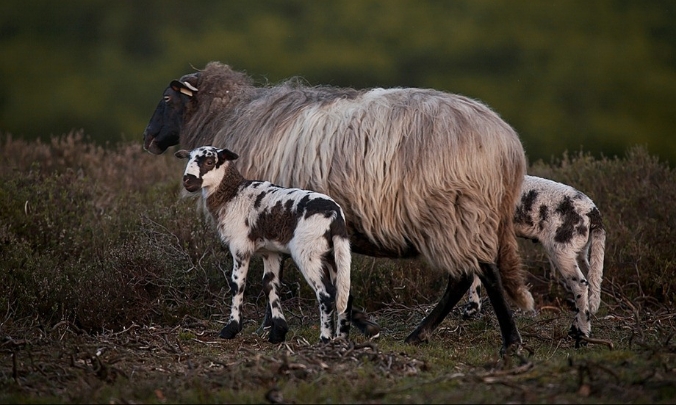
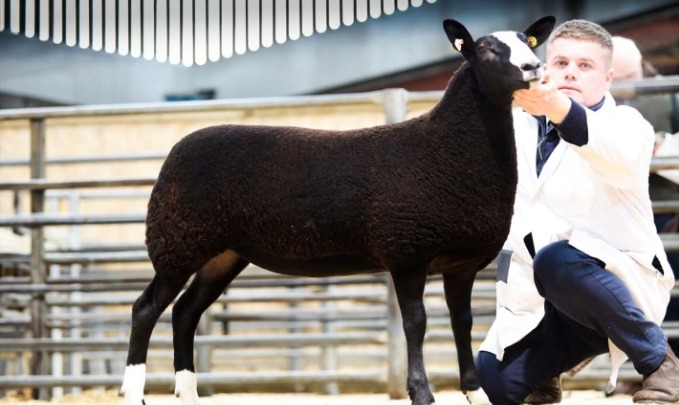
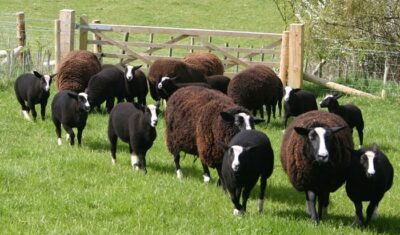
The Schoonebeker lambs were at the time walked to the livestock market in Norg where they were sold as store lambs to farmers from Northern Friesland who used them to fertilise their pastures while fattening. This practice declined when commercial fertilisers became available and the Schoonebeker lamb trade crashed resulting in the Schoonebeker becoming an extremely rare breed.
Some of the store lambs sold had badger face markings that resemble the modern day Zwartbles sheep, and if you look at the pictures of the Schoonebeker you can see the resemblance including the slight roman noses, long neck and erect posture. A number of Friesian farmers decided to line breed these “Zwartbles “ Schoonebeker sheep and with some influence from Friesian Milk sheep and Texel’s the modern day Zwartbles was developed. Interestingly in the early years the Zwartbles was sometimes referred to as the “improved Schoonebeker”
Due to changes in farming practices numbers dwindled to an estimated 500 animals by 1978 with only about 250 of these considered to be of purebred Zwartbles quality. The majority of these were kept by only six breeders with between 10 to 55 breeding ewes (Van Helden and Minkema, 1978). Numbers started to increase by the late 1970s mainly due to the interest of hobby wool spinners in black wool and in 1985 a number of Dutch breeders started a Zwartbles flock book.
The first Zwartbles were imported into the UK in 1986 and
in increasing numbers into the 1990s. In 1995 the Zwartbles Sheep Association was formed and as the saying goes “The rest is History “ with currently in 2014 around 700 registered flocks and some 12,500 registered animals.
Breed Standard
A breed standard in animal breeds is a set of guidelines which is used to ensure that the animals produced by a breeder conform to the specifics of the breed. It is the template to which the breed aspires. Not all sheep are born with the correct features or markings and absence of these does not prevent the breeder from registering the animal, but nevertheless, that registered sheep may still be deemed not to meet the breed standard.
The Zwartbles has good conformation, with a big frame, medium bone, good length and a wide pelvis. A tall sheep, with a striking and naturally polled head, a long neck and an erect posture. It is an upright and fully built sheep with an alert and lively character.
Rams have a more muscular formed front part and a wider head.
Colour/Markings
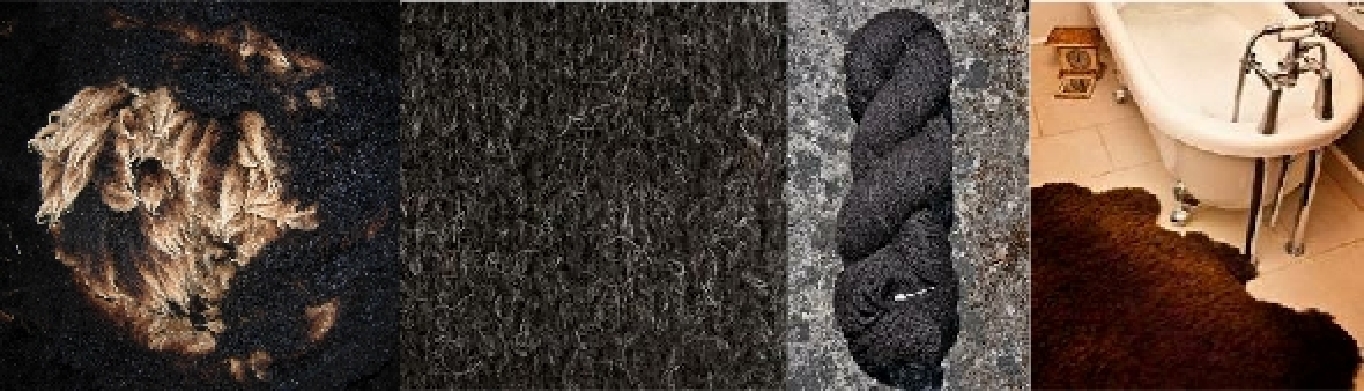
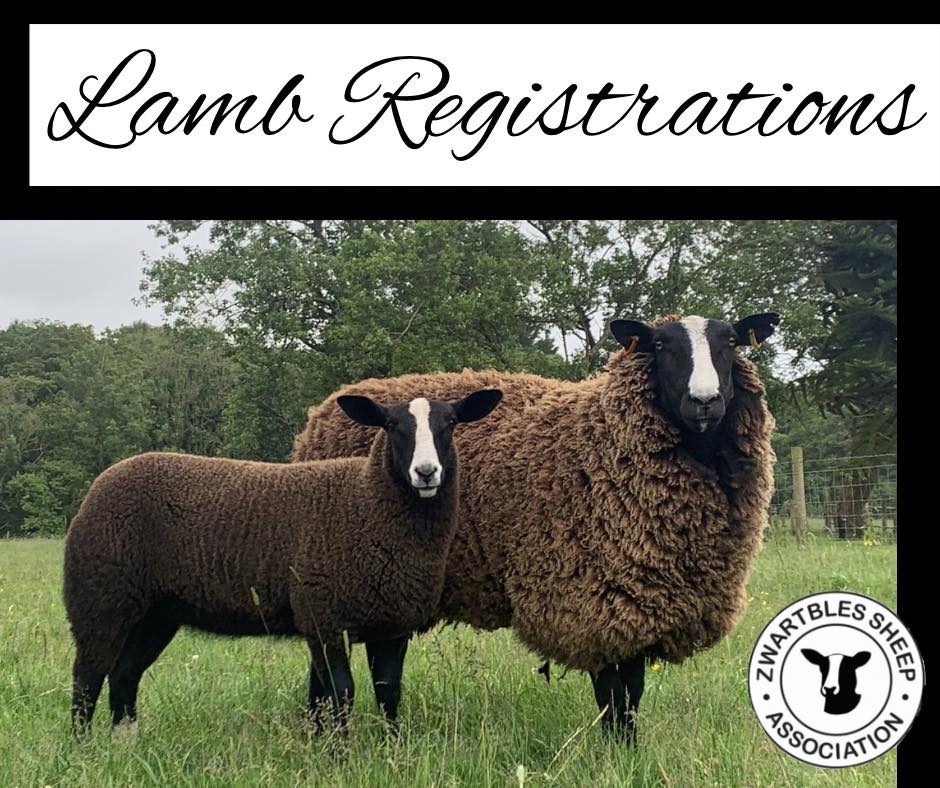
a) Fleeces should be thick and springy with a good crimp, with a true black base colour (though naturally bleached brown tips and age-related grey may occur). The fleece does not grow onto the head which, like the legs, is covered with hair.
b) Blazes should be uninterrupted and reasonably straight and may be any width and may continue under the chin, but not into the wool. The white blaze should run from the crown of the head and may include the muzzle. Pink or black noses are acceptable.
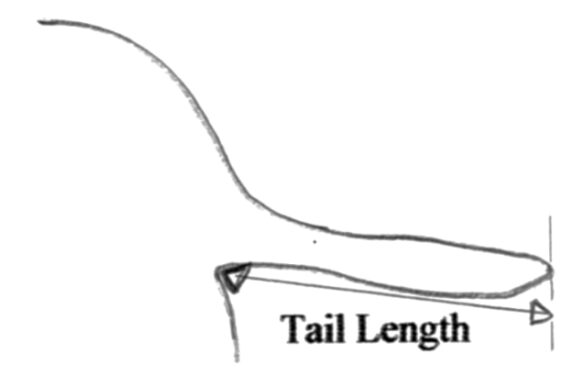
c) Tails should be straight and have a readily discernible white tip which should not extend more than ½ the way up its length in both ewes and rams. (see diagram)
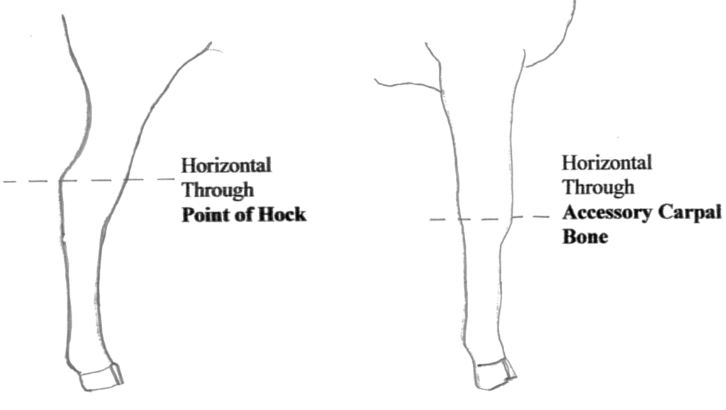
d) Two to four white socks – two of which must be on the hind legs. The sock should encircle the leg and touch the hoof at one or more places. Socks / stockings should not be above the knee or hock (See diagram) please note it is preferred that the white does not extend this far.
e) There should be no white in the fleece, on the ears or belly.
General Description of body shape and conformation
Head: The head must be long and narrow with a straight to very slightly roman nose.
Ears: These must be proportionately large and should be placed horizontally to erectly. Drooping ears are undesirable.
Neck/Throat: Necks must be proportionately fairly long and flexible, and the latter should be carried erectly. A ram’s neck must be more muscular and somewhat wider.
Shoulders: These should be strong and slightly sloping.
Breast: This should be well-developed and moderately, but not excessively, wide. Viewed from the side the breast should protrude between the front legs. An adult Zwartbles ewe should have stomach and udder at the lowest points.
Back: With the erect head and neck the back should run straight with easily detectable vertebrae.
Ribs: From the back the ribs should be round and long.
Rump: This should be long, slightly rounded, strong with a wide pelvis. It ensures easy lambing and room for wide udder placement. The top of the rump can be a few cm higher than the withers and the ‘sitting part’ of the rump can be a few cms lower than the hips.
Thighs: These should be muscular, long and well rounded.
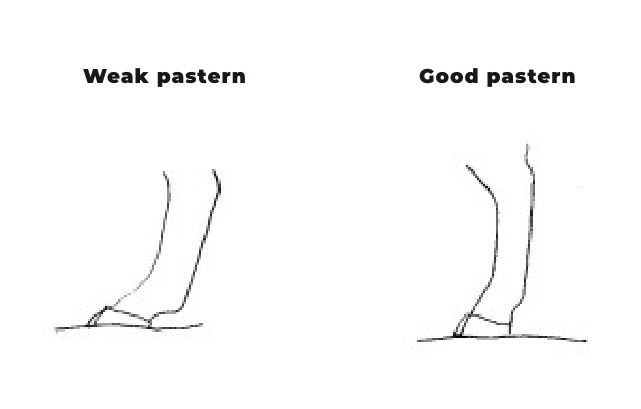
Legs: These should be long with medium to fine bone and correct pasterns. Pasterns that are too upright or collapsed are incorrect. (See diagram). The legs should be hard and tight. Correct Zwartbles posture includes straight and equidistantly placed legs the front legs of good tall ewes tend to come in very slightly from the shoulder to the knee and then straight from the knee to the hoof, but should not be rotated outwards.
Thighs: These should be muscular, long and well rounded.
Legs: These should be long with medium to fine bone and correct pasterns. Pasterns that are too upright or collapsed are incorrect. (See diagram). The legs should be hard and tight. Correct Zwartbles posture includes straight and equidistantly placed legs the front legs of good tall ewes tend to come in very slightly from the shoulder to the knee and then straight from the knee to the hoof, but should not be rotated outwards.
Hooves: These may be black, striped or white.
Tail: The tail should be well set on and undocked.
Gait: The gait should be brisk, straight and springy.
Genitalia: The scrotum of a ram should be finely haired and not woolly. The testes should be well-developed, firm and of a similar size.
Height: The ideal adult height at the withers is – ewes from 75cm and rams from 85cm.
Registration into the Flock Book:
Sheep with conformation defects, including but not restricted to the following, should be excluded from registration:
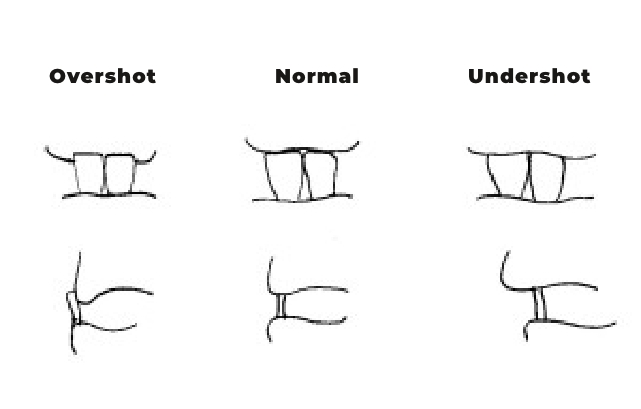
a) Over/Under shot jaws
b) Twisted feet
c) Twisted tails – this is a corkscrew twist of any degree, not a naturally broken tail
d) Poor conformation.
e) Blindness, blue, china or wall eyes, either total or partial.
f) Arrow tipped tail – this has appeared in the Dutch flock and is described as a tail whose end vertebrae appear to have been squashed flat, as if ironed flat, like an arrow head at the end of the shaft.
g) Sexual defects – i.e. rams without two sufficiently developed testicles apparent in the scrotum.
h) Docked tails
Teeth: It is most important that the teeth bite firmly and fully onto the pad on the upper jaw. (Overshot teeth that do not touch the pad should not be registered).
Sheep which do vary significantly from the breed standard should be excluded from registration
Rules & Regulations
a) Full Membership: open to keepers of registered Zwartbles Sheep; allows receipt of correspondence and one vote per Membership.
b) Associate Membership: open to non-keepers of registered Zwartbles Sheep; allows receipt of correspondence and no entitlement to voting.
c) Subscriptions are due annually on 1st January.
d) Standing Order forms are obtainable from the Secretary.
c) Subscriptions are due annually on 1st January.
d) Standing Order forms are obtainable from the Secretary.
a) Members may register a Flock Name that will appear on the Pedigree Certificate of all lambs subsequently registered as being bred by that Member.
b) Registration of a Flock Name is conditional upon:
i) Payment of the Flock Registration Fee
ii) The name not being already registered by another ZSA Member and
acceptable by Council.
c) i) Naming of Males is Compulsory
ii) Rams can only be given a name if there is a Flock Name registered with the
Society
iii) Rams can only have the Flock name of the “Breeding” Flock.
iv) Pedigree Certificates will not be changed retrospectively i.e. the Ram name will only appear on Pedigree Certificates printed after the date of naming.
v) A ram name, which cannot consist of more than 30 characters including the Flock name, must start with the Year Letter.
vi) Ram names cannot be used more than once within a Flock.
vii) Ram names will not be issued by the Society if thought to be inappropriate.
a) Only sheep from fully registered Zwartbles parents are eligible for registration.
b) All applications for registration must include two generations of registered parents (where possible), Date of Birth and Mode (i.e. single/twin/triplet – 1/2/3/)
c) Imported sheep must be registered with the ZSA for their progeny to be eligible for registration.
d) A ‘Ram Service Certificate’ should be forwarded with the registration application where AI or ‘other ownership’ ram has been used. This can be obtained from the Secretary.
a) Upon acceptance into the Association every Member must contact their regional government office for the issue of a national flock number.
b) Flocks will also be issued with a ZSA number, e.g. 01, 02, 03, etc. by the Association.
c) The Association requires registered sheep, born after 1st January, 2005 to be tagged with a Year Letter, Individual unique Number and Association Flock Number. The Association will not recognise animals born after 1st January 2005 not so identified.
All sheep must be tagged before an application is made for registration.
Members should check with DEFRA, or their equivalent Government organisation, that they also comply with current government tagging regulations.
The annual year letter is: 2008=P, 2009=R, 2010=S, 2011=T, 2012 = W, 2013 = A, 2014 = B etc.
d) Tags may be purchased from Members’ choice of supplier.
e) All sheep to be tagged with EID in the left ear (as viewed from behind) and second tag in right ear in accordance with
Government legislation.
f) In the event of any sheep losing its tag it must be re-tagged with the original number.
a) Only fully paid-up members will be allowed to register sheep; this should be the breeder or importer. Lambs must be born after 1st January.
b) All pure-bred lambs born in the season must be registered with the Association by 6 months of age. After this date double registration fees apply.
c) Sheep must be registered before the end of their shearling year, registration after this is not permissible.
e) Upon purchase, all new owners should transfer the sheep into their ownership by post, with the appropriate fee.
f) Sheep purchased at Official Sales will be transferred automatically.
Lambs should not be submitted for registration under the following circumstances:
a) Abnormalities including but not restricted to:
i) Over/Under shot jaws
ii) Twisted feet
iii) Twisted tails
iv) Poor conformation
v) Blindness, blue, china or wall eyes, either total or partial.
vi) Arrow tipped tail (this has appeared in the Dutch
flock and is described as a tail whose end vertebrae appear to have been
squashed flat, as if ironed flat)
vii) Sexual defects – i.e. rams without two sufficiently developed testicles
apparent in the scrotum.
b) Docked Tail
a) All adult sheep for showing to be shorn between 1st January and 1st May of the show year.
a) All sheep forward at Breed Sales must be registered with the ZSA SIX WEEKS PRIOR TO SALE.
b) All sheep forward will be the property of Members of the ZSA. If the governing body of the sale accepts sheep from non-members they shall be sold at the end of the ZSA’s Members’ run in their appropriate ring.
c) Excessive entries at sales: Council reserves the right to govern the number of entries at Breed Sales (by means of reduction based on the percentage of registered stock within the seller’s flock). This will be adequately described in the appropriate Sale Schedule.
d) Substitute entries must be notified no later than 7 days before the sale unless the appropriate Sale Schedule gives a different time limit.
e) All entries to be made available for inspection at the sale: sheep which, in the opinion of the Breed Inspectors, fail to meet the breed standards for characteristics and conformation or are unhealthy or injured will be excluded from the sale. No refund of entry fees will be made for sheep excluded from the Sale. Sheep which have been excluded shall be returned to their transport forthwith and not further exhibited for sale.
f) Council may set minimum reserve (upset) prices for sale entries.
g) At the Championship line-ups the sheep that were placed second to the Champions in their classes may be brought forward when judging of the Reserve Champion takes place.
h) Should the Champion in any class not meet its reserve and therefore not be sold it will not be permitted to enter the show classes at other Official Breed Sales in the same calendar year if shown by the same vendor.
i) Only rosettes awarded at the relevant sale can be on display.
j) Rams and Ram Lambs:
All rams, including ram lambs, are warranted by the seller to be capable of natural and effective service within 100 days of the Sale. If at the expiration of the warranty period a ram is proven incapable of natural and effective service and within 14 days of the expiration of the warranty period a Veterinary Certificate is lodged with the Official Auctioneers confirming:
i) The ram is incapable of performing a natural effective service; and
ii) The Veterinary Surgeon has inspected the Purchaser’s ewes and found
them to be in normal, responsible breeding condition; then the Purchaser
may return the animal to the Seller and be fully reimbursed.
k) In-Lamb Ewe Sales:
All rams specified as being the ‘sire of’ or ‘having run with the ewe’ must be registered with the ZSA in order for the progeny to be registered. Ewes running with unregistered rams shall be excluded from the sale.
l) “Trotting up prices” is not permitted, members risk removal if found to be doing this
m) Showing sheep not for sale is not permitted – realistic reserve prices must be set.
n) Any interference with natural tooth growth is not permitted.
o) Any attempt to lessen, conceal, or obscure white in the fleece is not permitted.
a) Trimming is freestyle but the use of artificial colouring, paint, sprays, chalk, etc. are not permitted and any attempt to conceal or obscure white in the fleece is not permitted.
b) Any members attempting to produce a more permanent change to the appearance of a sheep may be barred from Membership of the Association.
c) Members exhibiting at shows must obey the rules of the Show Society and ZSA Rules.
a) Any sheep which has been imported must be notified to the Secretary within three months. Its original pedigree certificate accompanied by the relevant payment for registration with the ZSA (see Fees) should be sent to the Secretary as soon as possible. Offspring will not be able to be registered unless the parents are registered with the ZSA
b) A photocopy of the ram registration certificate must accompany requests for registration of progeny from imported in-lamb ewes.
c) Imported sheep shall carry the prefix IM on their pedigree certificates.
d) Parents of imported sheep which remain in their country of origin shall carry letters appropriate to that country on the UK pedigree certificate of their progeny, e.g. Holland -NL, Belgium -BM for registrations from 2000 onwards as retrospective change is very difficult to administer.
At a Council meeting held during the last quarter of each calendar year the Scale of Charges to be used by the Association for the following year will be determined. This Scale of Charges will appear in the appropriate section of the Year Book following their Annual Review.
First Year Membership fee £65.00 (includes £10 joining fee and £10 flock name registration)
Annual Membership fee £45.00 pa if paid by cheque £40.00 pa if paid by standing order.
Associate Membership is £20.
| Paper Registrations: | Females: (Each) | Fee Increases after six months old: (each) | Males: (Each) | Fee Increases after six months old: (each) |
|---|---|---|---|---|
| Emailed Certificate | £6.00 | £16.00 | £25.00 | £35.00 |
| Printed Certificate | £7.00 | £17.00 | £26.00 | £36.00 |
| Online Registrations: | Females: (Each) | Fee Increases after six months old: (each) | Males: (Each) | Fee Increases after six months old: (each) |
|---|---|---|---|---|
| Emailed Certificate | £5.00 | £16.00 | £25.00 | £35.00 |
| Printed Certificate | £7.00 | £17.00 | £26.00 | £36.00 |
| Imported Sheep: Ewes & Rams | £20.00 (each) |
| Transfer Fee | £7.00 (payable by purchaser) |
| Re-Issue of Certificate | £2.00 (each) |
Paper Registrations:
Emailed Certificate
Printed Certificate
Online Registrations
Emailed Certificate
Printed Certificate
Other Fees:
Imported Sheep: Ewes & Rams
£20.00 (each)
Transfer Fee
£7.00 (payable by purchaser)
Re-Issue of Certificate
£2.00 (each)
Females £5.00 each
Males £25.00 each
ALL LATE FEES APPLY TO ON-LINE REGISTRATIONS
Imported sheep: Ewes & Rams £20.00 each
Transfer Fee £7 each (payable by purchaser)
Re-issue of Certificate £2.00 each
These fees are subject to Annual Review.
Any Member who fails to comply with the Rules of the Association or, in the opinion of Council, acts in a manner that is detrimental to the standing of the Association shall at the discretion of Council be barred from Membership of the Association
Breed Promotion
NSA (National Sheep Association)
The NSA (National Sheep Association) is a specialist organisation that provides a voice for all members of the sheep industry –commercial, pedigree , upland or lowland , large or small.
It was founded in 1892 and was then called “The National Sheep Breeders Association“ to develop a forum for progressive breeders to discuss their views and improve the breeding management of sheep.
Over the next 70 years the association took a broader role and changed its name to the NSA in 1969.
NSA receives no government funding or levies but relies almost entirely on the annual subscription of its farmer – based membership.
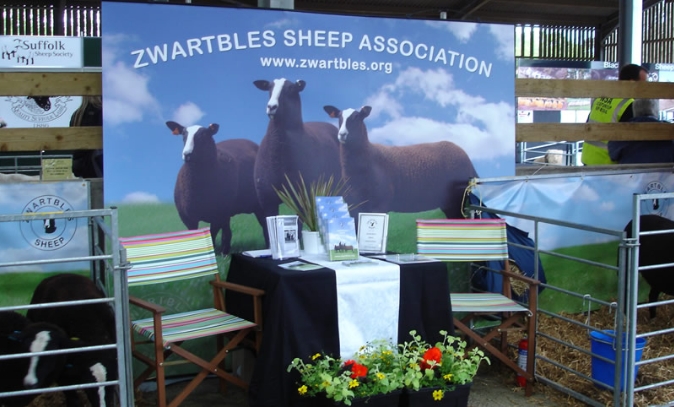
The NSA hold many events , the association organises Sheep Technology Centres at the major agricultural shows – Royal Highland Show, Royal Welsh Show and Balmoral Show. These centres demonstrate information of interest to producers and visitors alike. They include live exhibits from breed societies, the Zwartbles Sheep Association supports such shows and regional events where possible, they are useful sources of information on new technology and sheep health, fleece competitions and other details on a variety of sheep matters.
For full details of the role of the NSA click here
Cross Breeding
This section of the website is to be devoted to the ability of the Zwartbles breed, whether as sire or dam, to be an effective variety to use for cross breeding.
Most of the cross breeding carried out at present uses the females because of their outstanding maternal qualities.
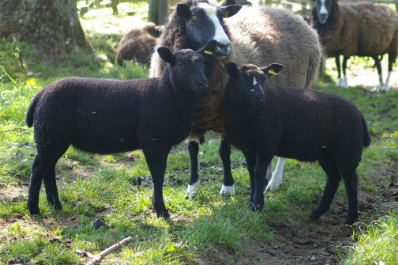
Pure Zwartbles Ewe x Pure Texel Ram = Texel Cross Zwartbles lambs
The colour markings in this case are not important but it is the quality of the animal in terms of its conformation in order to produce lambs able to reach killing weights as soon as possible with a carcase grading of R3L.
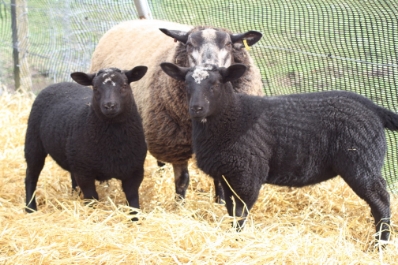
Blue Texel Ewe x Pure Zwartbles Ram
The Zwartbles ram as a sire has not been extensively used but does have some qualities that could be used to good effect on certain varieties. There is sometimes a problem with lambing some continental varieties because of their skeletal structure. The shape of the Zwartbles with a longer neck and narrower shoulders allows a much easier lambing for those varieties that might otherwise struggle to deliver their lambs without assistance.
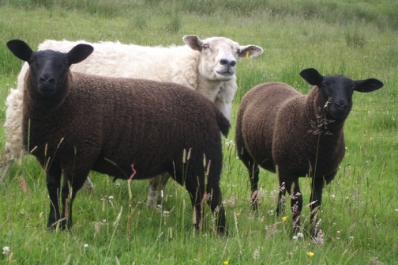
Texel Cross Ewe x Pure Zwartbles Ram
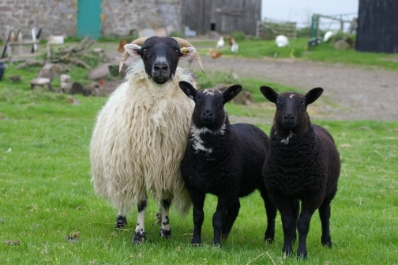
Blackface ewe x Pure Zwartbles Ram
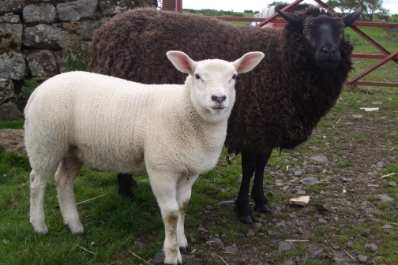
Zwartbles x Suffolk Ewe x Pure Texel Ram
Zwartbles rams have been used on texel gimmers to good effect on their first lambing with the resulting females having the option of selling into the fat trade or selling on as breeding females where the black Zwartbles cross females will produce white lambs with a suitable terminal sire.
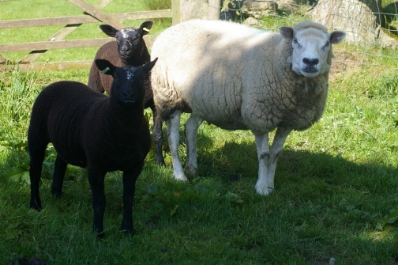
Pure Texel Ewe x Pure Zwartbles Ram
There is some evidence that the NCC cross is proving itself in the Highlands and a definite interest in testing a Welsh Mountain cross.
Wool